A few days in Sofia, many conversations — and one recurring question: how do we turn competitiveness strategies into actual impact?
It was a privilege to join the GFCC | The Global Federation of Competitiveness Councils Global Annual Meeting and Global Innovation Summit as a GFCC member, alongside leaders from government, business, academia and innovation ecosystems from across the world.
The discussions ranged from AI and the future of competitiveness to regional development, investment and the changing geopolitical environment. What made the meeting particularly valuable was the diversity of perspectives: competitiveness looks very different from Washington, Tokyo, Brussels, Sofia or Central Europe — but many of the underlying challenges are shared.
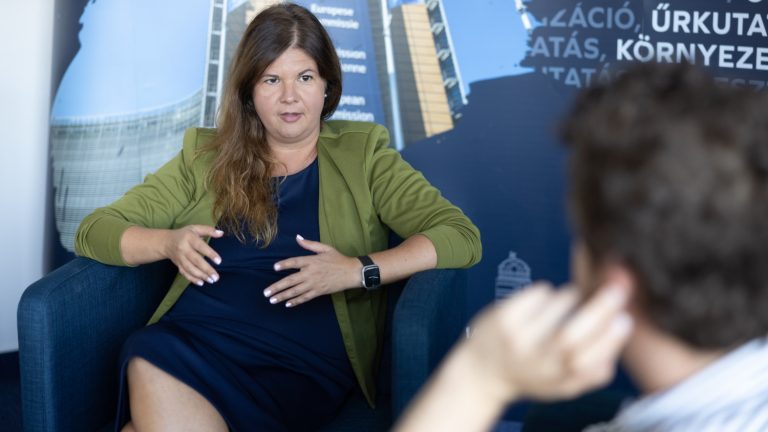
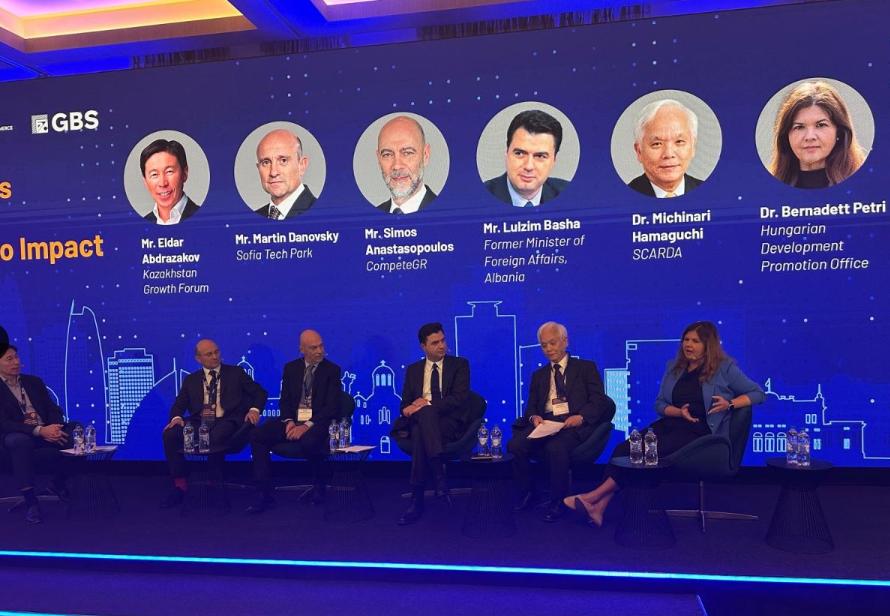
I had the opportunity to contribute from the perspective of the Magyar Fejlesztésösztönző Iroda Nonprofit Kft. (MFOI Advisory) and Central Europe, including on the panel “Competitiveness Frontiers: From Strategy to Impact.” Together with Eldar Abdrazakov, Simos Anastasopoulos, Lulzim Basha, Martin Danovsky and Michinari Hamaguchi, we discussed why so many well-designed competitiveness strategies struggle when they reach implementation.
My key message was simple: competitiveness is not created by strategies alone. It is created by implementation capacity.
That capacity cannot exist only at national level. Regions, cities, universities, SMEs and local innovation ecosystems ultimately determine whether strategies become investment, innovation and new capabilities — or remain policy documents.
This is particularly important in Europe, where substantial resources are available for research, innovation and the green and digital transitions, yet the capacity to translate these opportunities into results remains highly uneven across regions.
A very special word of appreciation goes to the Hon. Deborah L. Wince-Smith President and CEO of the GFCC. Deborah has an extraordinary ability to bring together people, institutions and ideas from across the world and turn them into a genuine global community. Her intellectual leadership, energy and commitment are truly remarkable. I am personally very grateful for her encouragement, openness and our many thought-provoking conversations.
Congratulations also to the entire GFCC team and our Bulgarian hosts for an exceptionally well-organised programme. The quality of the speakers and discussions — and the space created for meaningful conversations and new partnerships — made this much more than another international conference.
I return from Sofia with new ideas and partnerships, including promising conversations with colleagues from Japan and Portugal.
My main takeaway:
The next generation of competitiveness policy should be judged not by how ambitious its strategies are, but by how effectively it turns ambition into capacity — and capacity into impact.
GFCC Global Annual Meeting and Global Innovation Summit
MFOI hírlevél
Legyen naprakész a közvetlen EU programokkal és felhívásokkal kapcsolatban!
Iratkozzon fel hírlevelünkre és értesüljön az aktualitásokról elsőként.

Hungary Has Just 18 Months to Prepare for a Radical Overhaul of EU Funding
2026.10.09.
Hungary has just another year and a half to prepare for the sweeping transformation of the EU funding system expected from 2028 onwards, while the gap between Hungarian businesses and their European counterparts in accessing direct EU funding can now often be measured in years rather than months, Bernadett Petri said.
Safeguarding Children in Europe’s Digital Transition: The Funding Gap of Safer Internet Centres
2026.04.01.
One of the European Union’s flagship initiatives for the digital transition is the Digital Europe Programme, which aims to strengthen Member States’ technological capacities and support the development of artificial intelligence, cybersecurity, and digital skills. Within this programme, however, there exists a less visible yet strategically significant pillar: the Safer Internet Centres (SICs), which serve…
Why cohesion policy matters more than ever for European competitiveness
2026.02.23.
and how bridging the innovation gap can help tackle the European Union’s global challenges with a healthier and longer-lasting strategy
2026.02.19.
The transformation of the European Union’s budget is not merely a technical matter: it shapes territorial structures, locks in development trajectories, and, in the long term, influences the balance of the internal market. The regional distribution of directly managed EU programmes – particularly those supporting research and development, innovation and competitiveness – now displays a…2025.11.18.
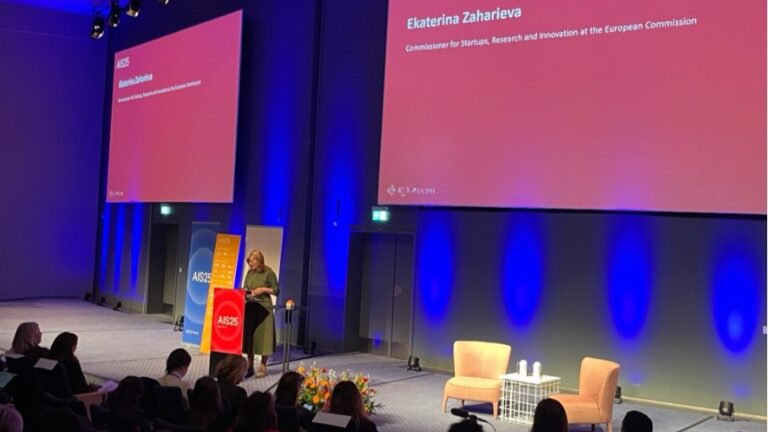
Our colleague, Viktória Lilla Pató, took part in the “AI in Science Summit 2025” held in Copenhagen on 3–4 November, organised by the Danish EU Presidency and the European Commission. The two-day conference focused on how Europe can harness the power of artificial intelligence for scientific research and, in doing so, open a new chapter…2025.11.06.
We are pleased to share that our first joint event between Türkiye and Hungary was held successfully, bringing together nearly 400 participants. This impressive turnout clearly reflects the growing interest in both countries towards EU funding opportunities and international collaboration. The Event aimed to connect institutions, businesses, and key stakeholders from both countries and to support their participation in directly managed EU…